What Chladni patterns reveal about building software with intention
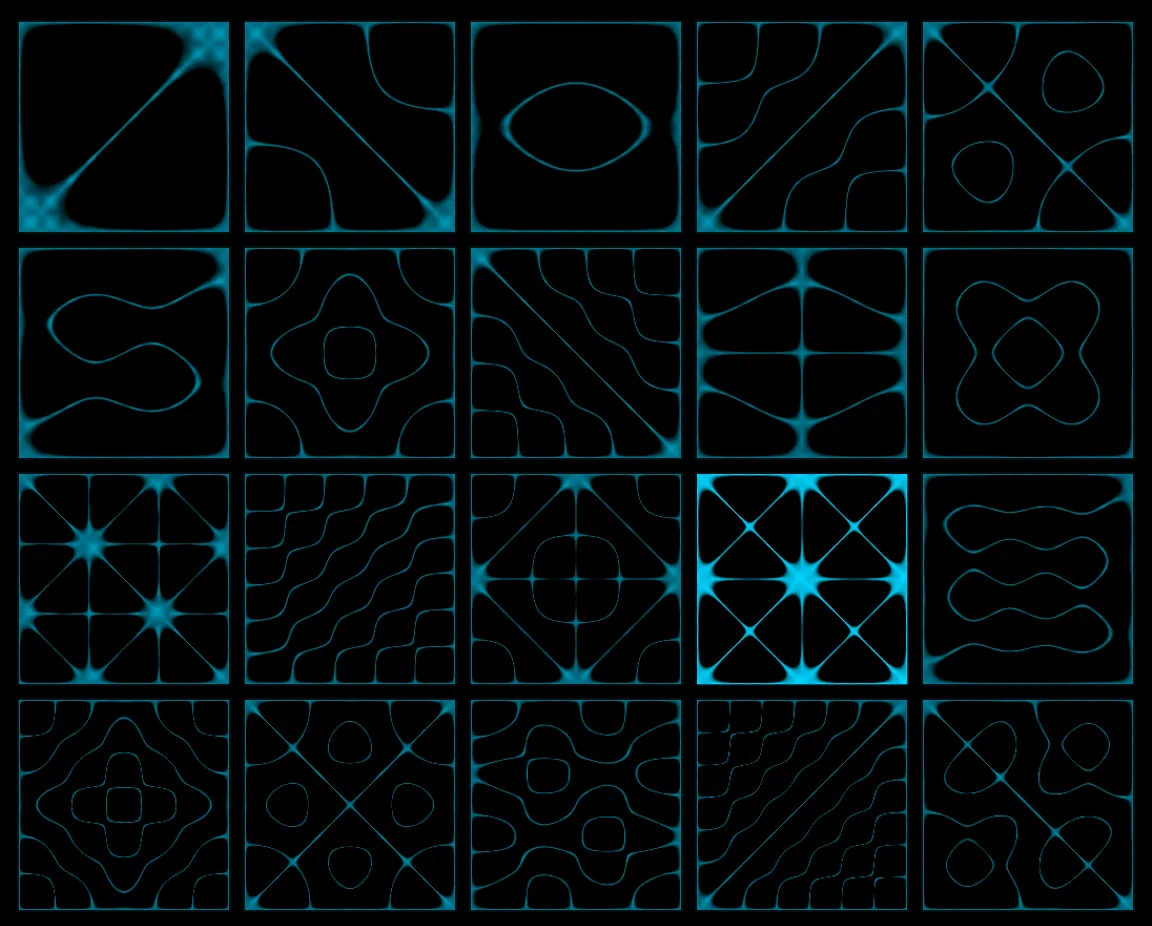
We put these images on our homepage because they were beautiful. Twenty geometric patterns, cyan on black, each one different but clearly part of the same family. They felt right for a company called Generative Labs. The math was elegant. The aesthetic matched our brand.
That was the whole reason.
It wasn't until we started reading deeply into the physics behind them that the rest clicked. We'd chosen a visual metaphor for everything we believe about building software.
Sand on a vibrating plate
In 1787, a German physicist named Ernst Chladni ran a bow across the edge of a metal plate covered in fine sand. The plate vibrated. The sand moved. And instead of scattering randomly, the grains settled into precise geometric patterns along the lines where the plate wasn't moving (the nodal lines, where vibration cancels to zero).
Different frequencies produced different patterns. Same plate, same sand. Change the frequency, change the structure entirely.
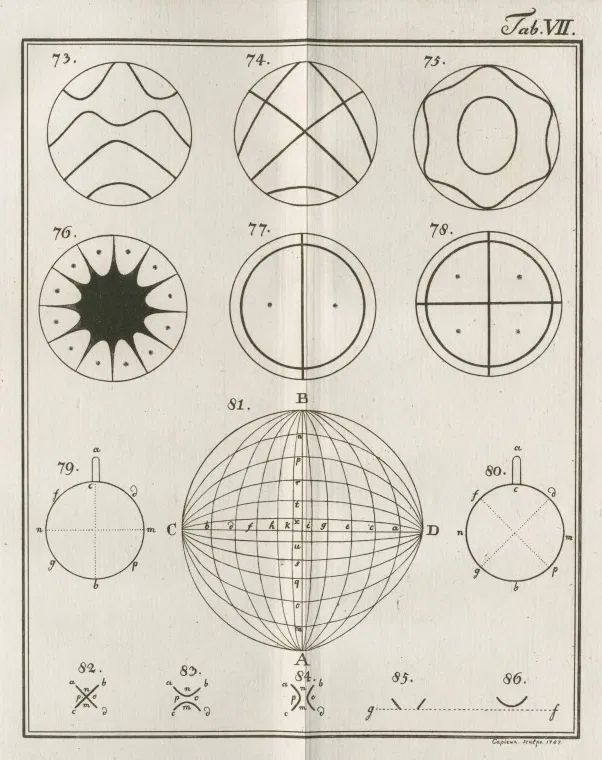
It was one of the first times an invisible force was made visible. You couldn't see the vibration. But you could see what it created.
The patterns on our homepage are generated from the same equation Chladni's experiments revealed:
f(x,y) = a·sin(nπx)·sin(mπy) + b·sin(mπx)·sin(nπy)
Twenty cells in a grid. Each one uses different mode parameters from that single equation. That's it. One formula, twenty patterns. The variety comes entirely from the input.
The connection we didn't plan
Here's what started to click, the more we sat with these images.
Resonance creates structure. Volume doesn't. Chladni patterns only form when the frequency is right. Vibrate the plate randomly and you get noise. Sand bouncing everywhere, no coherence. But hit the right frequency and something beautiful, intricate, ordered appears. Not because someone designed the pattern. Because the physics found it.
This is the difference between building with intention and building with volume. More AI output doesn't produce better products. More generated code doesn't produce better architecture. More prompts don't produce better thinking. But the right collaboration (the right combination of domain expertise and product thinking and agentic capability) produces something none of those ingredients could produce alone. Structure emerges.
The input determines everything. Same equation, different parameters, completely different pattern. Not a variation. A fundamentally different structure. Look at the grid on our homepage: some cells show concentric curves, others show sharp angular geometry, others show spiraling intersections. All from the same math.
"AI amplifies your direction, right or wrong." We wrote that in our manifesto. The Chladni equation is a literal demonstration. The equation doesn't care which parameters you give it. It produces whatever those parameters dictate, with total fidelity. Your input isn't just important. It's the only thing that matters.
The patterns aren't designed. They emerge. Nobody draws a Chladni pattern. Nobody tells the sand where to settle. The structure arises from the interaction between the vibration and the medium. There's a set of rules (physics) and an input (frequency), and what appears is something neither could produce alone.
This is what building with AI feels like at its best. You don't design every line. You set the parameters (the product brief, the architecture, the domain constraints) and work alongside agents that execute with speed and breadth. What emerges is something neither human nor agent could produce independently. The human provides the frequency. The agents are the medium. The product is the pattern.
The invisible, made visible. Chladni's real genius wasn't the vibration. It was the sand. The vibration was always there. The standing waves were always there. The nodal lines existed whether anyone could see them or not. What Chladni did was make the invisible structure visible by finding the right way to reveal it.
We think about our work similarly. The patterns that produce great products (clear product thinking, domain expertise in the room, layered collaboration between humans and agents) have always been what separates good software from bad. AI didn't invent those patterns. It made them visible. When the feedback loop is fast enough, when agents are generating in real time, you can see the difference between intentional direction and vague prompting almost immediately. The good patterns reveal themselves. So do the bad ones.
One formula, infinite variety
There's one more thing about the Chladni grid that resonates.
Twenty patterns. One equation. The variety doesn't come from complexity. It comes from input. Each cell is the same simple math with different parameters. And the range of what that simple math produces is extraordinary.
That's what a way of working should feel like. Not a complex framework that prescribes every step. A clear set of principles (collaboration across three layers, domain expertise in the build, intentional direction before agents execute) that produces different outcomes for every engagement because the input is different every time. Your domain. Your market. Your expertise.
The equation is the way of working. Your expertise is the frequency. The product is the pattern that nobody else could have produced, because nobody else has your particular combination of inputs.
Follow the thinking.
We write when we learn something worth sharing. No schedule, no spam.