AI Isn't Replacing Developers. It's Expanding Who Builds.
AI isn't replacing developers.
The current the narrative = Fewer jobs. AI eating the industry.
What I'm actually seeing = more people building software than ever before.
Clients show up with working prototypes. Vibe-coded apps. AI-generated designs they've already tested with users. Six months ago they brought slide decks.
None of them call themselves developers. All of them are developing.
Who creates software is changing. The space isn't contracting. It's exploding.
The wrong unit of analysis
The "fewer developer jobs" story is measuring the wrong thing. It focuses on existing developers doing existing work. That's a real variable. But it misses the bigger one.
Ask instead: who is building software now that wasn't before?
A compliance lead builds an internal review platform. A logistics director creates a routing tool from fifteen years of running the routes. A financial advisor ships a client portal that reflects how real advisory relationships actually work, not how a developer imagined they might.
These aren't projects that were sitting in some developer's backlog. They're problems that never had a technical path to a solution. The demand is new. The builders are new. The entire category of work is new.
Focusing only on what's happening to the existing workforce is watching one variable in a system that just added a dozen new ones.
The pin factory
I was rereading Adam Smith over coffee on a Saturday morning. (The things you do when a problem won't leave you alone.) The opening pages of The Wealth of Nations, published in 1776, describe a pin factory. A single worker making pins from scratch could produce maybe one per day. Divide the process into eighteen specialized steps, and ten workers produce 48,000 pins per day.
Smith's insight wasn't just about efficiency. The division of labor changed who could participate in making things. You no longer needed a master craftsman who understood the entire process. You needed someone who could do one step well.
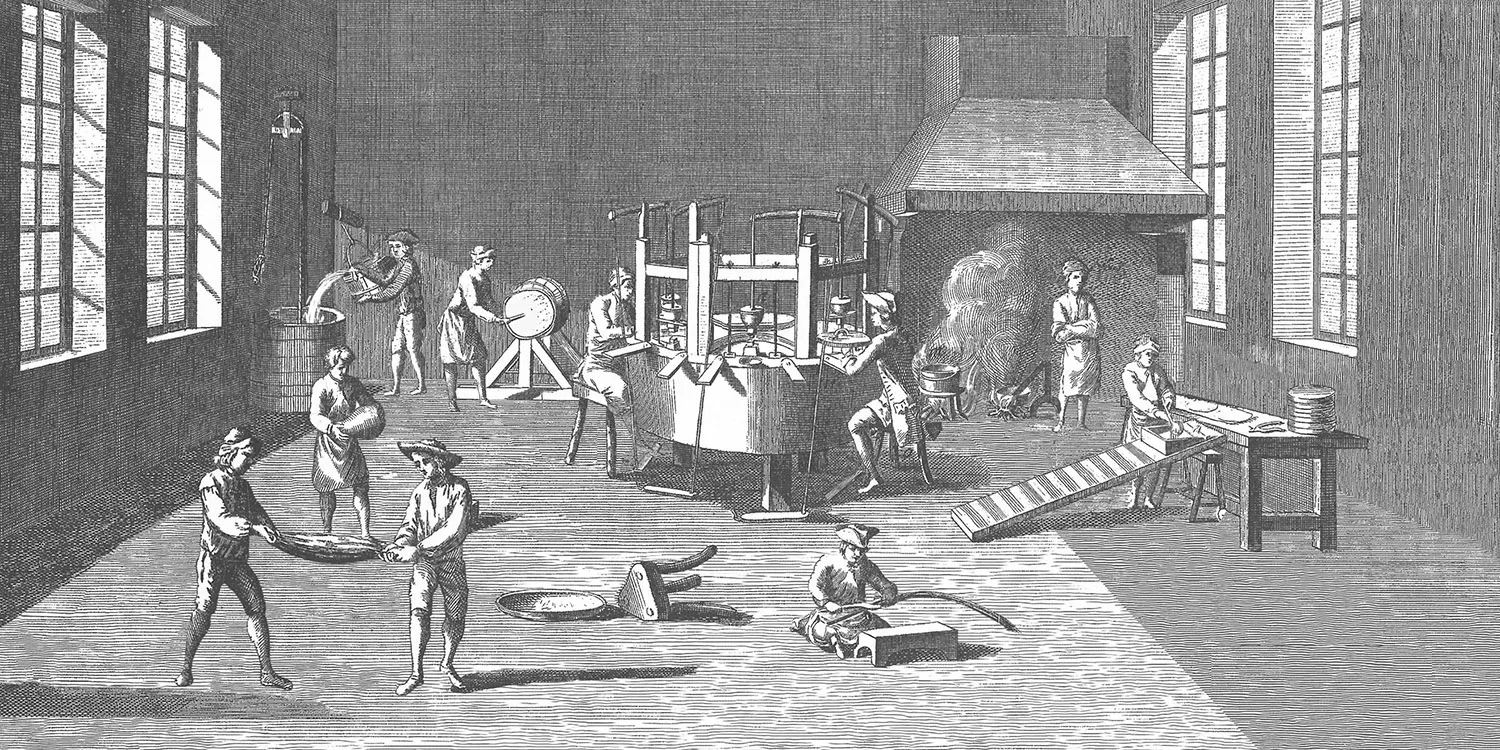
AI did something analogous to software, but in reverse. Instead of dividing a complex process into simpler pieces, it collapsed all the pieces into a single interface anyone can talk to. The barrier didn't get divided away. It dissolved. Anyone who can describe what they need can now participate in building it.
Smith noticed something else, too. Cheaper pins didn't just serve existing demand more efficiently. They created entirely new markets. Products that couldn't justify the cost of handmade pins suddenly had access to them. Productivity gains don't just redistribute existing work. They generate new demand that couldn't exist before.
That's exactly what's happening with software. The new builders aren't taking work from existing developers. They're arriving with problems that never would have been brought to a developer at all. The routing tool, the compliance platform, the advisory portal. None of those were on anyone's roadmap. They didn't exist as projects until the person who understood the problem could finally participate in building the solution.
New demand, not redistribution
The "AI is shrinking the industry" narrative assumes a fixed pool of demand being served by fewer people. Zero-sum thinking applied to a positive-sum shift.
We haven't had all the groups we've wanted, we've simply had all the groups we could afford.
What's actually happening: the pool is expanding. New surface area. New builders. New categories of problems being solved that had no technical path to a solution before. The total amount of software being created is going up. The number of people involved in creating it is going up.
This is the pattern Smith described 250 years ago, playing out in real time. Lower the cost of production and you don't just serve existing demand. You create demand that couldn't exist at the old price point.
The "old price point" for custom software was $100K and six months. At that cost, only certain problems justified building a solution. Drop the barrier to a domain expert with AI and a weekend, and thousands of problems become worth solving for the first time.
That's not a shrinking industry. That's an industry being reborn at a scale the original one never imagined.
The real bottleneck
Here's what Smith understood that most of today's AI narratives miss. Growth isn't ultimately a technology problem. It's a perception problem. The limiting factor on who participates in making things has always been whether people see themselves as makers.
The tools are here. The capability is real. What's holding most people back isn't technical skill.
It's identity.
It makes me think of someone I've long admired in the CS world, Seymour Papert, who spent his career at MIT proving that children could program computers if you gave them the right environment and got out of the way. In Mindstorms, writing about children as programmers, he nailed the mechanism:
"Thus deficiency becomes identity and learning is transformed from the early child's free exploration of the world to a chore beset by insecurities and self-imposed restrictions."
He was writing about kids and math in 1980. He could be writing about professionals and software today.
"I'm not a developer." "I'm the business side." "I wouldn't know where to start."
Those sentences used to describe a real barrier. Now they describe a habit of thinking that hasn't caught up to what's possible.
Who creates software is changing. Not everyone will make the shift. Not because they can't.
Because they still don't see it as theirs.
Let’s build it together.
We turn clever prototypes into production systems people can rely on. If you’re building with agents and want a hand making it real, leave your email and we’ll be in touch.